Zero Waste to Landfill
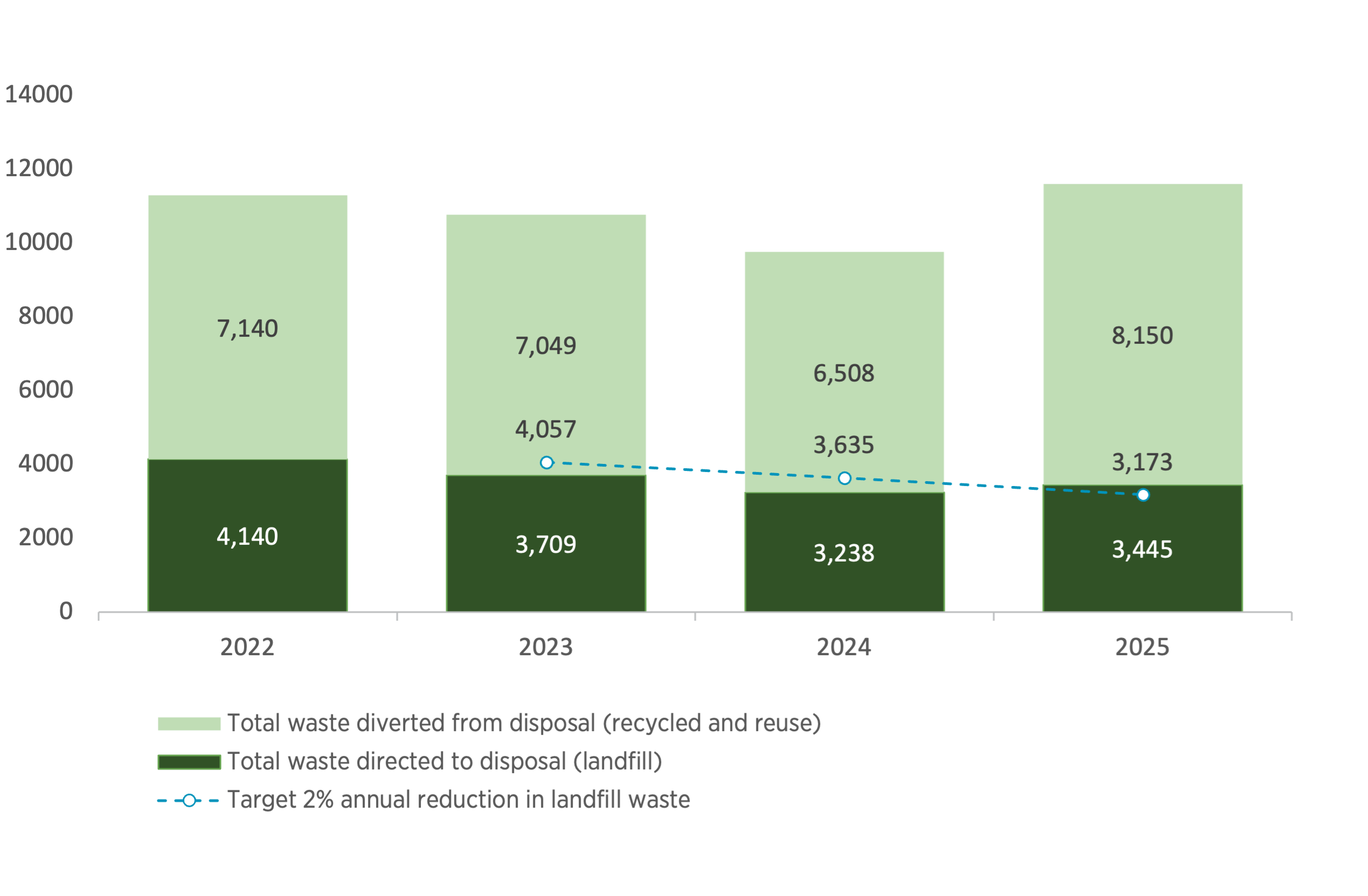
In 2024, we set a target of validating five facilities as Zero Waste to Landfill (ZWTL) by 2030, defined as a facility that diverts at least 90% of generated waste away from landfill through alternative methods such as recycling or reuse. In 2025, we made progress towards this target by establishing an internal ZWTL procedure modeled after the UL 2799 standard and validated our first two sites: Lanark, IL and Broadview, IL. Both facilities passed a documentation audit to verify waste tracking and data collection over a 12-month period and an onsite audit to verify waste disposal methods and standard processes.
Tackling Wood Waste Across Our Value Chain
Wood is a significant portion of our waste generation, used in both product packaging and inbound logistics. In 2025, we took a comprehensive approach to addressing this challenge, targeting waste prevention upstream in our supply chain and reuse and recycling downstream in our facilities. At our Norcross, GA facility, we piloted a wood waste reduction project to replace wood crates used in supplier shipments with cardboard packaging. We also introduced a wood pallet recycling program at several facilities with our pallet supplier, Pallet Central, to divert pallets from going to landfills.
Learn More